
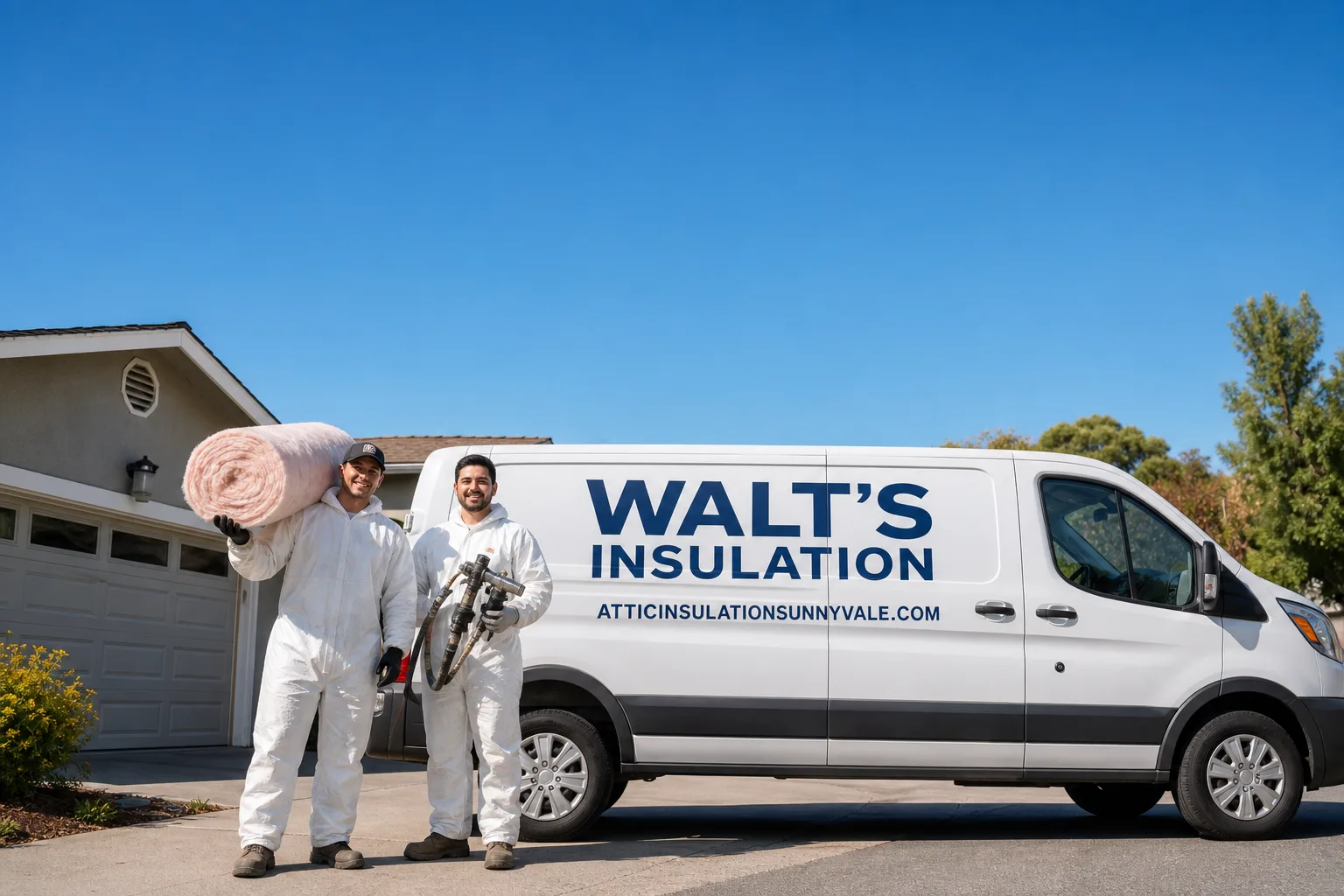
Fast, Reliable Attic Insulation Across Portola Valley
Most Portola Valley attics we inspect have a secret: empty stud bays hiding behind walls that look finished. The 1989 Loma Prieta earthquake forced structural retrofits all over town, and when those walls got closed back up, insulation was often the last thing anyone thought about. We’ve been fixing that oversight for over 25 years. If your heating bills spike at night or your upstairs rooms never hold temperature, call Walt’s Insulation at (669) 215-4805. We serve all of Portola Valley, from Alpine Road up to the Los Trancos Woods side of town.
We answer the phone live, 24/7. Not a call center. A real person who can schedule a blower door test or send a tech to your place on Alpine, Westridge, or Golden Oak within the county.
Why Walt’s Insulation Is Portola Valley’s Preferred Attic Insulation Company
Walt Brenner started this business in 2000 with a simple rule: if it isn’t done right, we make it right. That’s the Done Right Promise, and it covers every attic we touch in Portola Valley for life. No fine print. No runaround. When a customer on Ramona Road calls three years after an install and says a section of blow-in has settled, we send a crew. That’s the whole job.
Portola Valley homes are not Palo Alto homes. The hilltop lots, the canyon walls, the marine air pushing through gaps in the Santa Cruz Mountains, and the one-of-a-kind framing in mid-century post-and-beam construction all change how insulation performs. A company that spends most of its week in flatland grid streets won’t recognize what’s happening in your attic. We do.
Every tech who shows up at your door is background-checked and uniformed. We never subcontract the work. The one down the road, Walt’s Insulation, owns every mistake and every fix, because we’ve been the one down the road since 2000.
Our Attic Insulation Services in Portola Valley
Here’s what we actually do in Portola Valley attics. Not a menu. The work that solves the problems this town’s homes actually have.
Blown-In Attic Insulation
Blown-in fiberglass and cellulose make the most sense for Portola Valley’s irregular framing. Post-and-beam rafters, odd cavity depths, angled kneewalls: loose fill flows into the spaces that batts can’t fill cleanly. We use Owens Corning blown-in fiberglass on most jobs. In a 1970s home off Westridge, dense-packing the post-earthquake shear-wall bays with blow-in cut the homeowner’s nighttime heat loss within the week. That’s the kind of upgrade that shifts a utility bill.

Attic Batt Insulation
When a Portola Valley attic has standard 16-inch or 24-inch on-center framing, batt insulation still does solid work, especially with proper air sealing underneath. We stock Johns Manville and Rockwool batts, and we install them with wire or netting where the stud bays are just off-standard enough that friction-fit batts would sag or fall out. In the canyon’s marine air, we pair batts with vapor-control details that flatland installers often skip.

Attic Insulation Top-Up
Most pre-1980 Portola Valley homes have some insulation, but rarely enough by today’s standards. A top-up layers fresh blown-in fiberglass or cellulose over the existing material to hit a proper R-value for the climate zone. The catch: if your old batts are compacted with canyon moisture, a top-up won’t fix the problem underneath. We inspect first. Then we tell you whether you need a top-up or a full replacement, and we give you a written price before any work starts.

Attic Insulation Replacement
When insulation has been soaked by condensation, chewed by rodents, or compressed by decades of foot traffic in a storage attic, replacement is the only honest fix. This is common off Portola Road and Alpine Road, where vented attics pull humidity from the creek corridors. We pull the old material, inspect the framing, air-seal what needs sealing, and install fresh insulation. Every replacement carries the Done Right Promise, for as long as you own the house.

Attic Baffles & Ventilation Prep
Portola Valley’s marine air doesn’t just sit in the attic. It moves. Without proper baffles at the soffit line, blown-in insulation blocks airflow at the eaves, which leads to condensation and premature rot on the roof deck. We install baffles before insulating, every single time. On older ranches with narrow soffit gaps, this step makes the difference between an attic that breathes and one that stews in its own moisture.

What happens when you call
- 1
A real person answersNo phone trees - you reach a local pro.
- 2
You get an upfront price rangeHonest numbers before anyone is dispatched.
- 3
A background-checked tech heads outLicensed & insured, dispatched right away.
- 4
You approve before work beginsNothing starts until you say go.
Trusted Brands We Service in Portola Valley
We install and service insulation from Owens Corning, Johns Manville, and Rockwool, and the choice matters in Portola Valley’s microclimate. Rockwool’s moisture resistance holds up better than standard fiberglass in vented attics that pull damp marine air. Owens Corning blow-in fills the non-standard cavities in post-and-beam homes without leaving gaps. We keep a rolling stock of these products on our trucks, so a small Portola Valley job doesn’t wait on a supply house delivery.
Common Attic Insulation Problems We See in Portola Valley Homes
- Empty stud bays behind earthquake shear-wall repairs. After Loma Prieta, walls got opened, cripple walls got reinforced, and the framing went back together without insulation. A blower door test on a 1970s ranch here routinely turns up fully accessible stud bays with nothing inside, even when the owner believes the house was updated.
- Moisture-compressed fiberglass in vented attics. The canyon corridor funnels cool, damp marine air from the Santa Cruz Mountains through Portola Valley. That air hits older fiberglass batts, condenses, and compresses them to half their rated R-value. The insulation looks present. It’s not working.
- Non-standard framing that defeats off-the-shelf batts. Mid-century post-and-beam roofs and custom-built ranch homes don’t always have the tidy 16-inch cavities that batt manufacturers assume. Batts slide, sag, or leave gaps at the edges. We see this weekly on Alpine Road and the hillside lots above Portola Road.
- Kneewall insulation failures in hillside homes. Cantilevered floors and sloped terrain create kneewalls and angled cavities that flatland contractors often skip. A house on Westridge can have a fully insulated main attic while the north-facing kneewall is bare, bleeding heat all winter.
Pricing for Attic Insulation in Portola Valley, CA
Here’s straight talk on cost. A basic blown-in attic top-up in a Portola Valley ranch home typically runs $1,400 to $2,600. Full attic insulation replacement for a standard 1,800-square-foot home here usually lands between $3,200 and $5,800, depending on access, existing material removal, and whether we’re adding baffles and air sealing. Dense-packing post-earthquake stud bays or kneewalls typically adds $600 to $1,800. Custom post-and-beam homes with steep roof pitches or difficult access push the top end higher. Every estimate is written, upfront, and free. We also offer a free second opinion on any written estimate you’ve received, plus a permanent 10% discount for seniors and veterans.
We Also Serve Cities Near Portola Valley
If you’re just over the town line, we handle Attic Insulation work in Menlo Park, Los Altos, Palo Alto, and Mountain View, too. Same crews, same Done Right Promise. Our Attic Insulation in Portola Valley team knows the whole mid-Peninsula, from the flatland grids to the canyon walls.
Serving Portola Valley, CA - Our Local Coverage Area
We’re based in the Portola Valley area and know this community well. Use the map below to see our service coverage - if you’re nearby, we can almost certainly help.
FAQs - Attic Insulation in Portola Valley
The 1989 Loma Prieta earthquake pushed homeowners and contractors to open walls, reinforce cripple walls, and pull structural sheathing on hundreds of hillside homes. The goal was seismic safety, not thermal performance. When the framing went back together, the stud bays often stayed empty. A blower door test on a 1970s ranch off Alpine Road will still find bare, recently nailed framing that looks updated but has zero insulation. Call (669) 215-4805 for a free estimate, and we’ll tell you what’s actually inside your walls.
Portola Valley sits in a canyon corridor that pulls cool, moisture-laden marine air through gaps in the Santa Cruz Mountains. That means sharper day-to-night temperature swings and higher ambient humidity than neighboring Palo Alto or Menlo Park. In vented attics without proper baffles and air sealing, that damp air condenses on fiberglass batts, compressing them and cutting their R-value by half within a few years. Vapor control is not optional here. It’s the difference between insulation that lasts and insulation that quietly fails.
Yes. Blown-in fiberglass and cellulose are often the best fit for post-and-beam construction because the material flows into irregular cavities, odd stud depths, and angled kneewalls that standard batts can’t fill cleanly. We dense-pack the bays, which also slows air movement through the framing. On a 1970s post-and-beam home off Alpine Road, our crew dense-packed Owens Corning blown-in fiberglass into stud bays that a post-Loma Prieta shear wall retrofit had left empty, and the homeowner’s nighttime heat loss dropped measurably that same week.
Look for clues without opening walls: rooms that never hold temperature, heating bills that climb after dark, cold spots along exterior walls, or visible gaps at kneewall seams in the attic. The most reliable check is a blower door test combined with an infrared scan, which shows thermal voids behind the drywall. We offer home energy audits that include this. If your home went through a Loma Prieta retrofit and the walls were opened, there’s a real chance insulation never went back in.
Yes. Attic baffles keep insulation from blocking the soffit vents, which maintains airflow from the eaves to the ridge. In Portola Valley’s damp canyon air, blocked airflow means condensation, which rots roof decking and ruins insulation. We install baffles as part of every blow-in job where the soffit line is accessible, and we recommend them even for top-ups when the old baffles are missing or crushed. It’s cheap insurance against a wet attic.
If your Portola Valley attic has been ignoring you, or you suspect it was never put back together right after the quake, call Walt’s Insulation at (669) 215-4805. We’ll inspect it, tell you what’s there and what’s not, and give you a written price before we touch anything. Free estimates. Live person on the phone, day or night.
Written by Walt Brenner, Owner at Walt’s Insulation, serving Portola Valley and the mid-Peninsula since 2000.